Critical support 24/724/7 support TZ
USD and EUR at the rate of 30 Sep 2026 Dubai · New Jersey · Since 2019
EN
WEBSITES · PLATFORMS · SECURITY · AI

SECURITY · NIST CSF

What NIST CSF actually is, and where we sit

The NIST Cybersecurity Framework is a voluntary set of guidelines published by the US National Institute of Standards and Technology for organising and assessing how an organisation manages cybersecurity risk. It does not certify anyone. It gives a shared vocabulary for how systematic a security practice actually is.

The four NIST CSF tiers as rising steps: Tier 1 Partial, Tier 2 Risk Informed, Tier 3 Repeatable marked as where we sit, Tier 4 Adaptive marked as working toward 1234 PartialRiskInformedRepeatableAdaptive WE SIT HERE WORKING TOWARD

THE FOUR TIERS

What each tier actually looks like, day to day

Not a score you pass or fail. A description of how consistent and how adaptive a practice is.

Tier 1

Partial

Application of the organizational cybersecurity risk strategy is managed in an ad hoc manner.

Day to day
Decisions get made ad hoc, often by whoever is available at the time, with no policy that outlives the person who made the call.
Typically found at organisations like
Small businesses with no dedicated IT function, where "security" means someone remembers to update the site occasionally.
Cost to move up
Writing down what is already being done informally, and actually agreeing to follow it every time. The discipline is harder than the writing.
Tier 2

Risk Informed

Risk management practices are approved by management but may not be established as organization-wide policy.

Day to day
There is a plan, but it may only cover the systems someone thought to include, and different teams follow it to different degrees.
Typically found at organisations like
Mid-size firms with a part-time security consultant, or a generalist covering security alongside several other responsibilities.
Cost to move up
Making the practice organisation-wide rather than team by team, and repeating it often enough that it becomes routine rather than a one-off project.
Tier 3

Repeatable

The organization’s risk management practices are formally approved and expressed as policy.

Day to day
The same security decision gets made the same way regardless of who is on shift, because there is a documented, followed process rather than individual judgement.
Typically found at organisations like
Regulated financial institutions and mid-to-large engineering organisations typically operate here, since it is usually a baseline expectation from a client or a regulator.
Cost to move up
Building the feedback loop that lets practice adapt as new threats appear, rather than only when someone schedules a review.
Tier 4

Adaptive

There is an organization-wide approach to managing cybersecurity risks that uses risk-informed policies, processes, and procedures to address potential cybersecurity events.

Day to day
Threat intelligence and incident data feed directly back into policy, so defences shift as the threat landscape does, continuously rather than periodically.
Typically found at organisations like
National infrastructure operators and defence contractors typically operate here, where the cost of being wrong is severe enough to justify the sustained investment.
Cost to move up
Not a one-time achievement to move into. Sustaining it costs continuous investment in monitoring, feedback loops and staff time, indefinitely.

WHERE WE SIT

Tier 3, Repeatable, working toward Tier 4

What that means for a system built here, specifically.

TIER 3 · TODAY

Policies applied the same way on every project

  • Security headers configured
  • Encryption in transit and at rest
  • No third-party script on the render path
  • Every dependency justified and audited monthly

These are the documented default, not decided fresh by whoever is on a project that week.

TIER 4 · WORKING TOWARD

A practice that updates itself

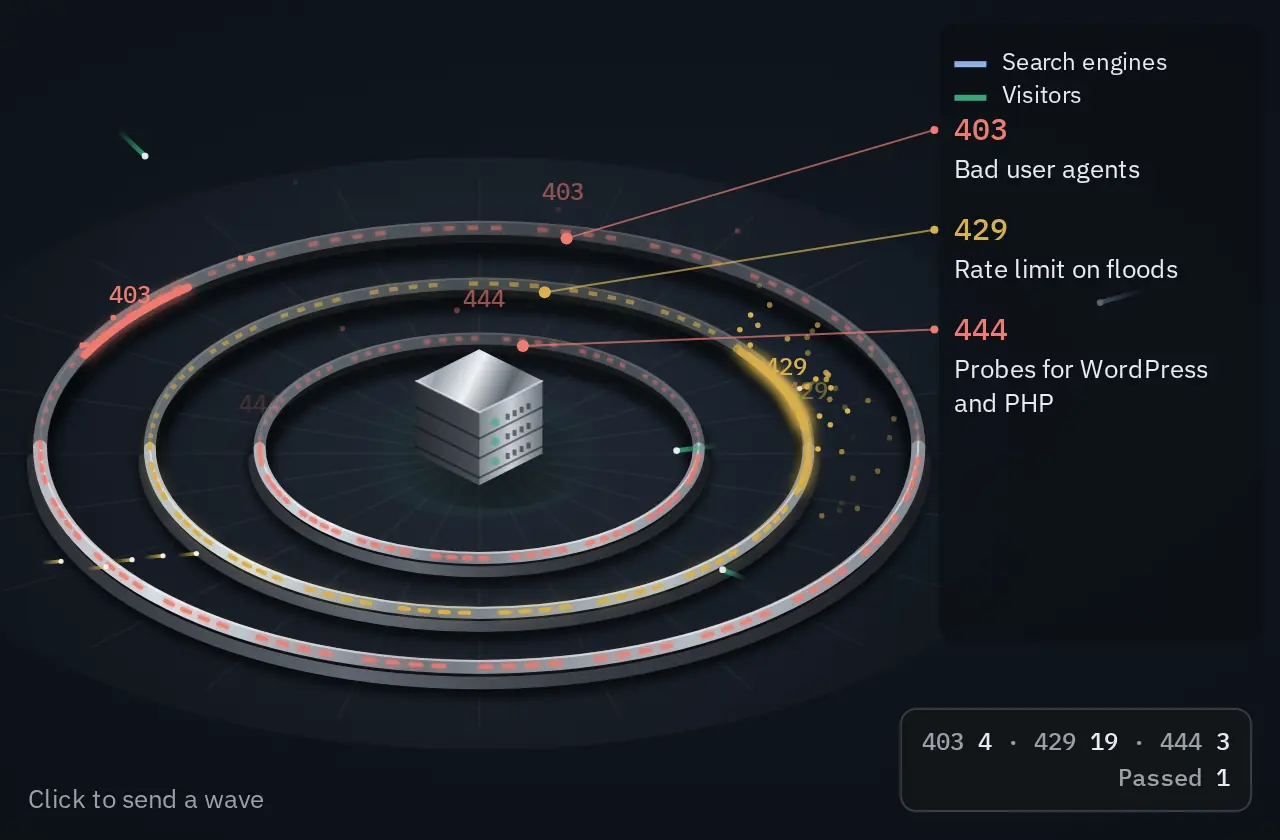
Tier 4, Adaptive, means a feedback loop that updates the practice as new threats appear, not only at a scheduled review.

Protection rings: requests stopped at three rings, 403 bad user agents, 429 rate limit and 444 probes Sample traffic
Two different Tier 3s
NIST CSF Tier 3Security practice maturity, an organisational discipline
Uptime Tier IIIUptime Institute's datacentre redundancy standard, physical infrastructure. It shares a number with NIST CSF Tier 3 and nothing else.

No completely secure system exists, and we will not tell you one of ours is. A tier describes how systematic a practice is, not a promise that nothing will ever go wrong.

When a vendor says they take security seriously, that is a claim. A stated tier on a scale the whole industry reads the same way is a checkable position, which is why we publish ours.

STRAIGHT ANSWERS

Questions about our NIST CSF position

The ones that come up when people notice we publish a specific tier instead of a general assurance.

A voluntary set of guidelines published by the US National Institute of Standards and Technology for organising and assessing how an organisation manages cybersecurity risk. It does not certify anyone. It gives a shared vocabulary for describing how systematic a security practice actually is, from reactive to fully adaptive.

Most small businesses with no dedicated IT function sit at Tier 1, Partial, where security decisions happen case by case rather than following a written, repeated process. That is not a criticism, it is simply what an informal practice looks like measured against this scale.

No, and the shared number is a coincidence vendors sometimes exploit. Uptime Institute Tier III measures datacentre redundancy, physical infrastructure. NIST CSF Tier 3 measures security practice maturity, an organisational discipline. Always state which framework you mean.

It means the security measures on your build, headers, encryption, dependency audits, no third-party script on the render path, are applied the same documented way on every project, not decided fresh by whoever happens to be working on it that week.

Send us your website address. We will tell you what is exposed.

The free technical audit covers security headers, plugin and theme inventory, known vulnerabilities and whether your admin login is publicly reachable. Two days, no charge, no obligation.